
Last Light
Dinosaur-GamesCasual
3.9481.00 Reviews
- Version
- 1.0.44
- Installs
- 500.00K
- Age Rating
- Everyone
Screenshots
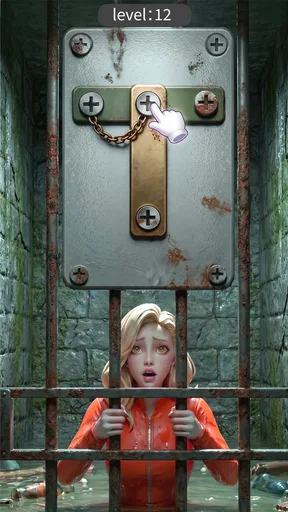
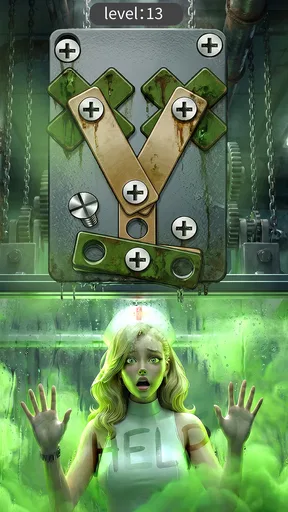
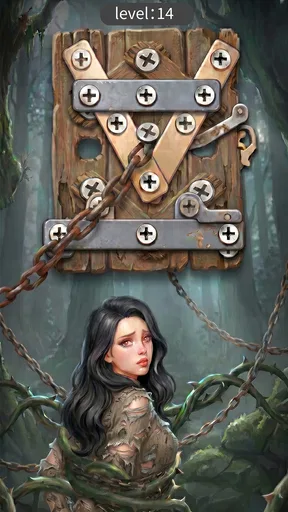
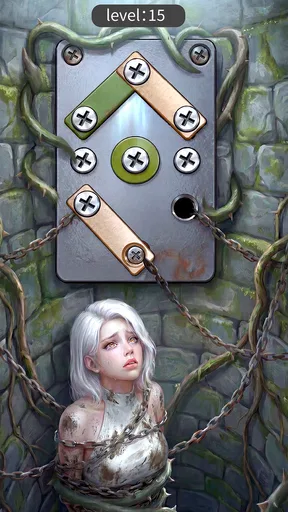
Our Review of Last Light
 Analysis by Appyee
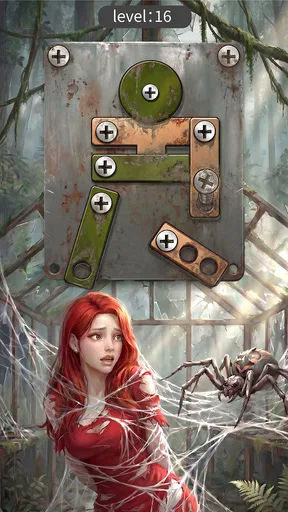
Last Light is a casual mobile game built around a simple but unusual idea: surviving a zombie apocalypse by unscrewing your way through obstacles. I found it easy to understand at first glance, yet the small actions demand more patience than the dark setting might suggest. It is not a fast shooter or a large survival sandbox. Instead, it focuses on short, tactile challenges where careful movement matters more than reflexes.
That makes it a good fit for anyone who enjoys compact puzzle-like games with a light horror theme. I would recommend it to a friend who wants something to play in brief sessions, especially when a conventional match-three game feels too familiar. At the same time, I would not choose it for someone looking for deep character development, open exploration, or constant action. The experience is narrower, and its appeal depends heavily on whether the unscrewing mechanic stays satisfying for you.
What the first sessions feel like
The opening experience is deliberately direct. You are placed in a zombie-apocalypse setting, and the central task is to work through objects by handling their screws. That basic loop gives the game its identity. Rather than asking you to memorize a complicated control scheme, it makes the challenge come from choosing what to move, what to leave in place, and how to avoid creating a dead end.
In my experience, the main place players get stuck is not understanding the objective. It is acting too quickly. A screw that looks harmless to remove can change the position of several connected pieces, leaving fewer useful options afterward. I learned to treat each move as part of a small plan instead of tapping whatever looked available. That change made the game feel less random and more like a compact spatial puzzle.
The zombie theme adds atmosphere, but the core appeal is mechanical. If you are expecting frightening encounters or a story-heavy apocalypse, the presentation may feel lighter than the premise suggests. The game works better when approached as a casual puzzle with survival decoration rather than as a full horror adventure.
The most useful early habit is to pause before every removal and scan the remaining spaces. I look for the piece that has the fewest possible destinations, then decide whether moving it now will open room or close it. This is a small adjustment, but it prevents many avoidable restarts and makes the short sessions feel more deliberate.
Why the simple idea can become surprisingly demanding
Unscrewing sounds repetitive until the layout begins to punish careless order. The difficulty comes from managing space. A piece may need to move temporarily so another part can be freed, but that temporary move is only helpful if there is somewhere safe to place it. Thinking one step ahead is often enough at the beginning; later, I found myself checking two or three consequences before committing.
This is also where the game separates itself from ordinary casual time-fillers. A typical match-three title lets you recover from a weak move because the board changes continuously. Last Light feels less forgiving when a poor decision blocks the remaining route. That makes success more satisfying, but it also means the game can become frustrating if you prefer constant forward motion.
The best everyday use case is a short break when you want something interactive but not mentally exhausting. I can imagine playing a few stages while waiting for an appointment or during a quiet commute, provided the player is comfortable with restarting a puzzle after a mistake. It is less suitable when you need a completely relaxing distraction with no pressure to plan.
Getting past setup and early friction
Last Light is free to download and is rated for Everyone, so it is accessible to a broad audience. It comes from Dinosaur-Games and requires Android 7.0 or later. Before installing, I would check the operating-system version rather than assuming that any older phone will run it. This is a simple step, but it avoids confusing an installation problem with a game problem.
The current version is 1.0.44. If the game behaves oddly immediately after installation, I would first close it completely and reopen it, then check whether the device has enough free storage for normal app operation. I would also avoid starting a session while several other demanding apps are active. These are ordinary checks, but they matter more on older devices, where slow response can make a precise puzzle feel unfair.
Another practical point is to distinguish loading trouble from control trouble. If the game opens but taps appear delayed, the issue may be device performance or an overloaded background process rather than the puzzle itself. A clean restart of the phone can be more useful than repeatedly tapping the same area. I prefer to test one change at a time so I know what actually solved the problem.
Because the game includes optional in-app purchases ranging from $0.99 to $99.99 per item, I would also review purchase controls before handing the device to a child. The Everyone rating describes the intended audience, but a family device still benefits from sensible purchase protection. I would play the free portion first and decide whether the basic loop is enjoyable before spending anything.
Recovering from a bad move
When I reach a position that seems blocked, my first reaction is not to blame the controls. I retrace the last few moves mentally and look for the earliest decision that reduced my available space. In this kind of puzzle, the visible problem is often created several actions earlier. Restarting from a known point can be faster than trying to force an arrangement that has already become impossible.
A useful recovery workflow is to separate “progress” from “movement.” I do not move a piece simply because an empty spot is available. I ask what that movement accomplishes: does it expose a screw, create a route, or preserve a future placement? If the answer is unclear, I wait. This keeps the board from becoming cluttered and gives me a better chance of recognizing the intended order.
I also recommend changing the pace of your touches. Rapid tapping can make it difficult to tell whether a piece moved because of the first input or because a second input was registered immediately afterward. Deliberate taps are especially helpful when several small components sit close together. This is not a hidden trick or a special setting; it is simply a better way to read the game’s tactile logic.
Another non-obvious trade-off is that restarting is not always a failure. In a game built around ordering, a failed attempt can reveal the structure of the puzzle. I use the first run to identify which pieces are constrained, then begin again with that knowledge. This turns frustration into a quick planning stage, although players who dislike repetition may find the process tiring.
When the problem is probably outside the game
Not every interruption points to a defect in Last Light. A weak connection can affect initial loading or other online-dependent moments, while a full device can cause general instability across multiple apps. If other games are also freezing, closing background apps and restarting the device is a sensible first test. If only this title is affected, checking that it is updated to version 1.0.44 is more relevant.
Touchscreen issues can be misleading in a game that depends on accurate selection. A dirty screen protector, moisture, or a case that interferes with edge touches may make a valid move feel unresponsive. I would test the same area in another app before concluding that the puzzle has ignored an input. If taps fail everywhere, the phone is the more likely source of the trouble.
Performance can also change when the device is hot or nearly out of battery. I would let it cool, close unnecessary apps, and try again before judging the game’s responsiveness. These checks are basic, but they protect the review process from blaming the wrong component. A puzzle requiring careful placement exposes small touchscreen and performance problems more clearly than a game with broad swipe controls.
For purchase-related concerns, I would use the platform’s normal account and payment controls rather than repeatedly attempting the same transaction inside the game. The free entry point makes it possible to evaluate the core experience without immediately committing money. That is important here because the value of an optional purchase depends on how long the unscrewing loop remains enjoyable for the individual player.
How it compares with familiar casual games
Compared with match-three games, Last Light is slower and more spatial. There is less emphasis on chasing combinations and more on preserving room for later actions. Compared with idle games, it asks for active attention instead of rewarding you while the phone sits untouched. Compared with action zombie games, it removes aiming and combat from the center, replacing them with controlled manipulation.
That difference is its strongest advantage and its clearest limitation. I like that the game does not require quick reactions or a large time commitment. I can stop after a short attempt without feeling that I have abandoned a long campaign. However, players who want frequent rewards, dramatic battles, or a broad collection system may find the experience too focused.
The rating sits at 3.9 from around six thousand ratings, with roughly five hundred written reviews, and the game has passed half a million installs. Those figures suggest that it has found a meaningful casual audience, but they do not guarantee that the central mechanic will suit everyone. I would treat the download as a low-risk trial because the game is free, then judge it by whether the puzzles feel satisfying rather than by popularity alone.
Who should try it and who should skip it
I think Last Light is best for players who enjoy orderly problem-solving, short sessions, and themes that add mood without demanding a large story commitment. It can work well for a parent looking for a game rated for Everyone, provided purchase controls are handled on the device. It is also a reasonable choice for someone who wants a casual game that rewards patience instead of rapid tapping.
I would skip it if you want a traditional zombie campaign, competitive multiplayer, or a game that can be played almost mindlessly. The unscrewing loop asks you to pay attention to sequence and space. Even when the controls are simple, the decisions are not always effortless. That can be refreshing after a busy day, but it can also feel like work when you only want background entertainment.
I would also be cautious if you are sensitive to repetition. The central action is the reason to play, and there is no point pretending otherwise. If manipulating similar objects stops feeling rewarding, the zombie setting alone is unlikely to carry the experience. In that situation, a match-three game may offer more variety, while an action title may provide the stronger sense of momentum.
My practical verdict after using it
Last Light succeeds because it gives a familiar survival theme a small, focused puzzle identity. I enjoyed the moments when a crowded arrangement became manageable after one carefully chosen move. The game is at its best when I slow down, preserve space, and accept that a restart can be part of the solution rather than a punishment.
Its main friction is equally clear: the experience can feel repetitive, and a careless move may create a position that is difficult to recover from. Device performance, touch accuracy, and purchase settings are worth checking before making a firm judgment. Those details do not replace good design, but they can strongly affect how fair and comfortable the game feels.
As a free casual game from Dinosaur-Games, it is easy to sample without a financial commitment. I would install it for short, thoughtful breaks and recommend trying several sessions before deciding whether optional purchases are worthwhile. My final view is positive but specific: choose Last Light for compact spatial puzzles with a zombie-apocalypse flavor, not for a full-scale zombie adventure. If that distinction matches what you want, the simple act of unscrewing can become an unexpectedly engaging way to pass a few minutes.
For me, the deciding question is straightforward: do you enjoy planning the order of small actions? If yes, this game has enough personality to stand apart from more predictable casual alternatives. If no, its focused mechanic may feel narrow very quickly. That honest trade-off is the most important thing to know before you begin.
Verdict
Strengths of Last Light
- Atmospheric lighting creates a tense and memorable horror experience.
- Exploration rewards players who carefully search dark environments.
- Sound effects heighten suspense and make threats feel unpredictable.
- The survival-focused gameplay keeps resources and decisions meaningful.
- Its eerie setting offers a distinctive alternative to typical action games.
Limitations of Last Light
- Dark scenes can make navigation difficult, even with careful exploration.
- Some encounters may feel frustrating when enemies appear with little warning.
- Progress can be slow for players who prefer fast-paced gameplay.
- The intense atmosphere may not suit users sensitive to horror themes.
- Performance may vary on older devices during visually demanding scenes.
Other Releases by Dinosaur-Games
View All
Epic Heroes
Role Playing3.8
Similar Picks in This Category
View All
My Talking Angela
Outfit7 Limited4.2

My Talking Tom
Outfit7 Limited4.3

Pou
Zakeh4.2

My Talking Tom 2: Pet Game
Outfit7 Limited4.3

Candy Crush Saga
King4.6

Bridge Race
Supersonic Studios LTD4.1
Frequently Asked Questions
What is Last Light, and what kind of game is it?
Last Light is a story-driven horror adventure focused on atmosphere, exploration, and survival. Players investigate a dark and unsettling environment while searching for clues, solving puzzles, and trying to understand what happened. The game relies more on tension, sound design, and careful exploration than constant combat, making it a suitable choice for players who enjoy mysterious narratives and psychological horror.
Can Last Light be played offline on Android or iOS?
Last Light may offer offline gameplay for its main experience, but availability can depend on the specific mobile version, installation requirements, and any content that connects to online services. It is best to launch the game once while connected to the internet, complete any required downloads, and check the store description before traveling or playing without Wi-Fi. Online advertisements or updates may still require a connection.
Is Last Light suitable for children?
Last Light is generally aimed at teenagers and adults rather than young children. Its horror presentation may include frightening imagery, disturbing situations, darkness, suspense, and intense sound effects. The exact age rating can vary between Android and iOS storefronts, so parents should review the current rating and content warnings before allowing a child to download it. Headphones can make the experience considerably more intense.
Does Last Light require a powerful phone or tablet?
The game should run on many relatively modern Android and iOS devices, but performance can vary according to the phone’s processor, available memory, operating-system version, and storage space. Horror games with detailed environments and lighting effects may experience slower frame rates on older hardware. Before installing, make sure the device has sufficient free storage, close background applications, and update the operating system if necessary.
Does Last Light contain advertisements, in-app purchases, or paid content?
The monetization model can differ depending on the edition and platform, so players should check the Google Play or App Store listing before downloading. Some versions may be paid upfront, while others can include advertising, optional purchases, or additional content. Reviewing the price, purchase notes, and permissions in the official store is recommended, especially for users who want a completely uninterrupted horror experience without unexpected charges.
Play our best games!


